

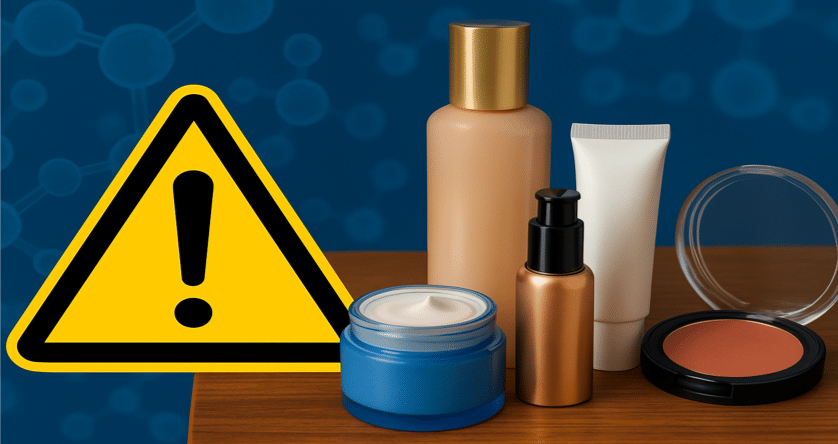
Executive Summary
The GSR 513(E) amendment to India’s Cosmetic Rules, 2020 marks a paradigm shift in cosmetic product compliance. From batch-wise testing and digital documentation to stricter cosmetic export labelling and license revocation powers for State Licensing Authorities, the new law enforces global standards locally. Non-compliance can now result in immediate suspension of your cosmetic manufacturing license. This article breaks down what every cosmetic brand must know and do.
With over four decades of industry trust, Auriga Research, a leading cosmetic testing laboratory, offers NABL-accredited services tailored for regulatory approval. Meanwhile, Arbro Pharmaceuticals delivers fully compliant cosmetic contract manufacturing for skincare and personal care brands, with built-in traceability and GMP certification. If your business operates in the cosmetics space—whether as a manufacturer, exporter, or white-label marketer—this is your definitive guide to staying audit-ready and protected in 2025 and beyond.
What Happened: The Compliance Landscape Redefined
In response to rising global standards and consumer safety concerns, India’s Ministry of Health and Family Welfare released the GSR 513(E) amendment on July 29, 2025. This amendment to the Cosmetics Rules 2020 is a regulatory milestone aimed at strengthening cosmetic product compliance and harmonizing Indian laws with global benchmarks. The notification followed GSR 371(E), which invited public comments in 2023. After thorough consultation, the government enacted this amendment to enhance transparency, enforceability, and safety in the cosmetic sector.
The amendment marks a shift from advisory protocols to enforceable obligations. It emphasizes batch-wise testing, label accuracy, and robust documentation for each product cycle. By empowering State Licensing Authorities with greater oversight—such as the ability to suspend or cancel a cosmetic manufacturing license—the government reinforces its commitment to public health and cosmetic regulatory testing integrity. For brands, this is a wake-up call to upgrade systems, training, and vendor partnerships.

Highlights of GSR 513(E) Amendment:
- Redefines “use before” and “expiry date” for greater label clarity
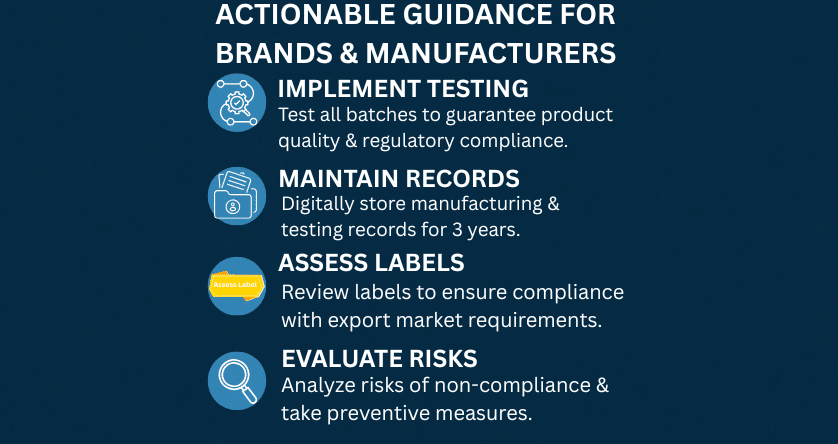
- Mandates batch-wise testing of raw materials and finished goods for all manufacturers
- Establishes a 3-year cosmetic batch record retention minimum or 6 months post-expiry
- Transfers full authority to State Licensing Authorities for issuing, suspending, or canceling cosmetic manufacturing licenses
- Makes cosmetic export labelling compliant with importing country’s legislation
- Recognizes digital documentation as valid for regulatory audits
- Exempts soap manufacturing from certain clauses, subject to SLA approval
- Requires manufacturers to use SLA-approved code numbers if exporter anonymity is needed
- Removes “courier delivery” as an acceptable means of product dispatch for regulatory purposes
Together, these changes bring Indian regulations closer to EU, FDA, and ISO 22716 standards—raising the bar for cosmetic product compliance.
Consequences of Non-Compliance: More Than Just Legal Trouble
1. Health Hazards:
Failing to meet cosmetic product compliance standards can result in serious health consequences for end users. Inadequate batch-wise testing often leaves formulations vulnerable to contamination, adulteration, and instability. This may lead to a surge in consumer complaints, allergic reactions, chemical burns, rashes, and in extreme cases, long-term dermatological damage.
Products with microbial overload or toxic residues are not only unsafe but also legally classifiable as spurious cosmetics under the GSR 513(E) amendment. Without reliable cosmetic regulatory testing, brands risk launching unsafe products into the market, damaging public trust. For exporters, substandard products can violate cosmetic export labelling requirements and lead to border detentions or bans.
Auriga Research’s NABL-accredited cosmetic testing laboratory eliminates such risks through validated methods and real-time batch verification. Prioritizing cosmetic product compliance is not just a legal mandate—it’s a health and reputation safeguard that no brand can afford to ignore.
2. Legal Backlash:
The GSR 513(E) amendment significantly raises the stakes for non-compliant cosmetic brands. Under Rule 31A, the State Licensing Authority is now empowered to suspend or cancel any cosmetic manufacturing license without delay if non-compliance is detected. This includes violations related to cosmetic batch record retention, improper cosmetic export labelling, or skipped batch-wise testing.
Brands unable to furnish digitally recorded test data or mislabel their products face not just license suspension but also fines, seizure of goods, and public blacklisting. Improper documentation is no longer a clerical error—it’s a punishable regulatory offense.
In this climate, reliable partners like Auriga Research—with its certified cosmetic regulatory testing protocols—and Arbro Pharmaceuticals—with its SOP-driven cosmetic contract manufacturing—offer the safety net modern brands need. Prevention is smarter than remediation. Legal ignorance is no longer a valid excuse.
3. Economic Fallout:
Regulatory non-compliance can cripple a brand’s financial health. From recall costs and relabeling efforts to halted exports and product reformulations, every misstep under the GSR 513(E) amendment comes with a price tag. Incomplete cosmetic product compliance records can trigger shipment bans, especially if cosmetic export labelling is found invalid by foreign regulators.
Reputational damage reduces consumer loyalty and invites social media backlash. Worse, revoked cosmetic manufacturing licenses can halt entire production lines, leaving shelves empty and contracts unfulfilled. For startups, this could mean business closure; for established brands, massive brand dilution.
That’s why partnering with Auriga Research’s cosmetic testing laboratory and Arbro Pharmaceuticals’ contract manufacturing laboratories is critical. Both offer cost-efficient, compliant solutions that prevent loss before it begins. Investing in cosmetic regulatory testing and documentation isn’t just compliance—it’s a business continuity strategy.
Legal & Global Benchmarks
The GSR 513(E) amendment aligns Indian cosmetic regulations with leading global standards, making cosmetic product compliance more internationally recognizable. The amended rules now mirror key aspects of the EU Cosmetic Regulation EC 1223/2009, the U.S. FDA Cosmetic Safety Framework, and the ISO 22716 GMP Guidelines. These global frameworks emphasize batch-wise testing, cosmetic export labelling, proper documentation, and quality assurance.
Domestically, the amendment mandates cosmetic batch record retention for at least three years, ensuring traceability and accountability for every cosmetic product manufactured or sold. It also gives State Licensing Authorities power to monitor, audit, and enforce regulations, especially in relation to cosmetic manufacturing license holders.
Brands aiming to export now have a unified checklist—complying with Indian law positions them closer to international approval. With Auriga Research and Arbro Pharmaceuticals, brands are supported with validated methods, digital recordkeeping, and cosmetic regulatory testing that meets global benchmarks.
How Auriga Research Helps: Testing with Precision and Purpose
With over 40 years of expertise, Auriga Research is India’s go-to cosmetic testing laboratory. Our services are tailored to GSR 513(E) and beyond:
Capabilities That Ensure Compliance:
- Microbial, chemical, and stability testing per global and SLA norms
- Batch-wise testing of every lot, from raw material to final product
- Validated testing methods: GC-MS, HPLC, FTIR, ICP-MS
- Digital lab reports, traceable and audit-ready
- Cosmetic label compliance and export packaging assessment
Auriga’s cosmetic regulatory testing covers everything from formulation analysis to shelf-life and packaging validation.
Arbro Pharmaceuticals: Manufacturing That Starts with Compliance
Backed by decades of R&D and GMP-certified operations, Arbro Pharmaceuticals delivers robust cosmetic contract manufacturing services:
- Turnkey third-party and white-label skincare production
- Custom solutions for serums, face creams, haircare, etc.
- Integrated QA/QC with cosmetic testing laboratories like Auriga
- SOP updates aligned with GSR 513(E) amendment
- SLA inspection preparedness and record management
Arbro ensures every batch is manufactured, labeled, and documented to withstand the toughest scrutiny—from regulators or consumers.
Action Points: What Cosmetic Brands Must Do Now
To remain competitive and compliant in the post-GSR 513(E) amendment environment, cosmetic brands must adopt a proactive, science-backed compliance framework. These action points outline exactly how to align with the new expectations of cosmetic product compliance and regulatory readiness:
1. Conduct Mandatory Batch-wise Testing
Ensure every batch of raw materials and finished products is tested through a certified cosmetic testing laboratory like Auriga Research. Use validated methods (GC-MS, HPLC, etc.) to screen for heavy metals, microbial load, preservatives, and allergens.
2. Maintain Digital and Physical Records
Comply with cosmetic batch record retention norms by storing reports for at least three years or six months post-expiry. This documentation is critical for inspections and SLA audits.
3. Validate Cosmetic Export Labelling
Ensure all exported cosmetics meet destination-country label laws. Include ingredient lists, shelf-life, and batch codes. Work with experts to ensure label text, format, and declarations align with global norms.
4. Review and Update SOPs
Align your internal practices with cosmetic manufacturing license conditions. Revise SOPs for production, QA, and documentation in line with ISO and SLA guidance.
5. Train Staff & Conduct Internal Audits
Educate employees on the GSR 513(E) amendment changes. Regularly audit internal processes to identify and close any compliance gaps early.
6. Partner with Reliable Manufacturing & Testing Providers
Engage with Arbro Pharmaceuticals for compliant cosmetic contract manufacturing and collaborate with Auriga Research for end-to-end cosmetic regulatory testing.
By implementing these steps, brands won’t just meet regulations—they’ll lead with confidence, credibility, and consumer trust.
Conclusion
In today’s regulatory environment, ignorance is no longer an excuse. The GSR 513(E) amendment demands every player in the cosmetic industry to step up their cosmetic product compliance strategy. Whether it’s robust batch-wise testing, validated cosmetic export labelling, or retaining documents for your cosmetic manufacturing license, compliance is non-negotiable. Trusted by thousands, Auriga Research ensures end-to-end support with its NABL-accredited cosmetic testing laboratory infrastructure.
For brands looking to scale production while staying audit-proof, Arbro Pharmaceuticals offers fully integrated cosmetic contract manufacturing aligned with international and domestic standards. Regulatory preparedness is no longer optional—it’s a competitive advantage. By partnering with testing and manufacturing leaders like Auriga and Arbro, you not only protect your brand from penalties and disruptions but also demonstrate integrity, safety, and reliability. Stay ahead of the curve. Choose science-backed, regulation-ready solutions. Choose Auriga and Arbro.
Stay proactive. Stay compliant—with Auriga Research and Arbro Pharmaceuticals.
Frequently Asked Questions
Q1. Why is the GSR 513(E) amendment a game-changer for cosmetic brands?
It enforces stricter cosmetic product compliance, including mandatory batch-wise testing and documentation standards. Brands failing to comply risk license suspension and loss of market credibility.
Q2. What does batch-wise testing include?
Each cosmetic batch must undergo cosmetic regulatory testing for contaminants, stability, and ingredient verification using methods like GC-MS or HPLC.
Q3. How does the new law affect manufacturing licenses?
SLA can now suspend or cancel any cosmetic manufacturing license found in violation of the amended rules, particularly those ignoring cosmetic batch record retention requirements.
Q4. Are all products affected equally?
Yes, though soap manufacturers have limited exemptions. Every other category must follow label regulations and cosmetic export labelling laws of the importing country.
Q5. How do Auriga and Arbro simplify Cosmetic Product Compliance?
Auriga ensures certified cosmetic testing laboratory services tailored to Indian and global norms. Arbro handles compliant manufacturing, packaging, and documentation under one roof. Both work jointly to eliminate compliance risks for your brand.